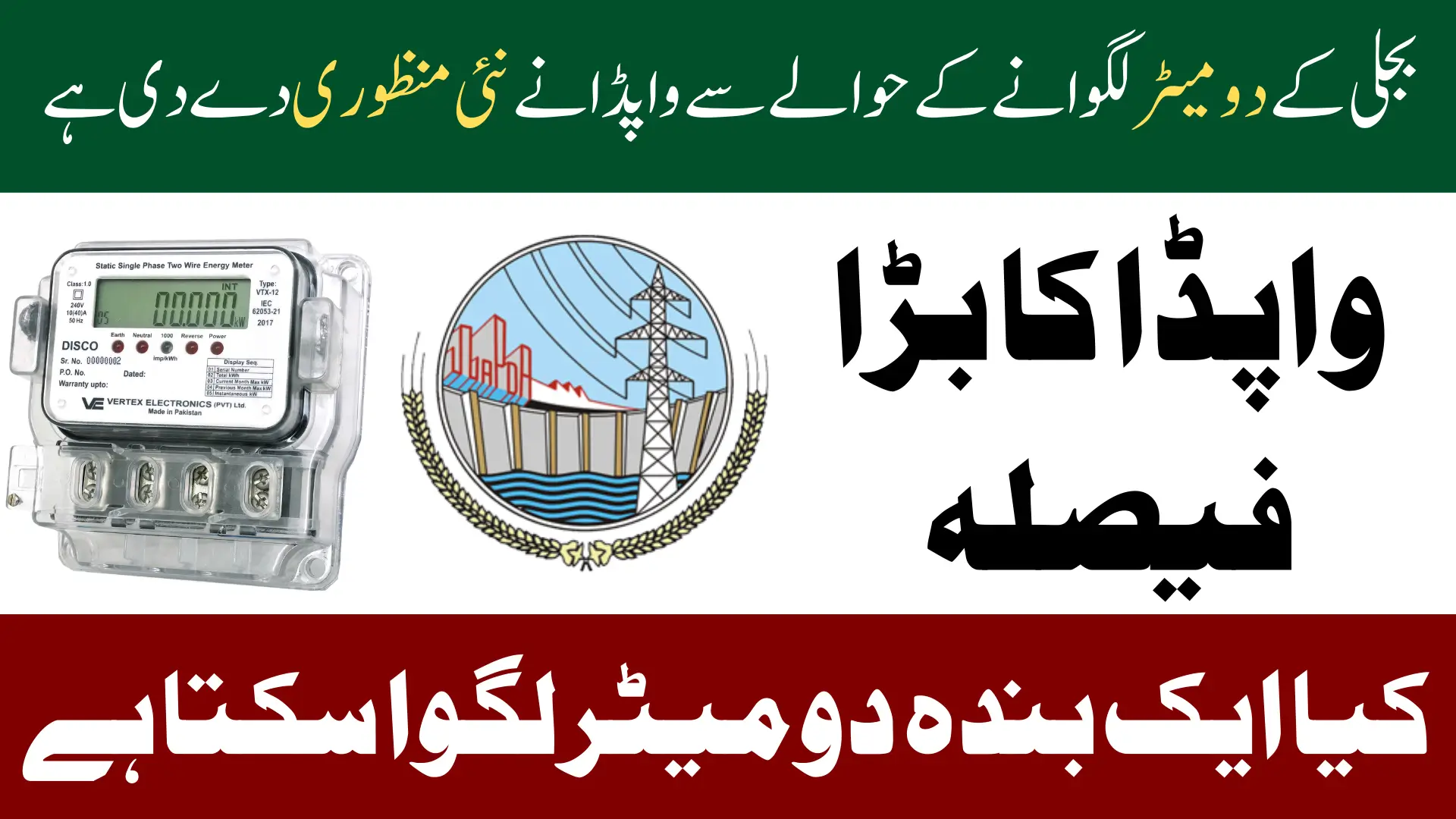
WAPDA New Electricity Meter Policy 2025
WAPDA New Electricity Meter Policy 2025 WAPDA, in coordination with the Power Division, has introduced the 2025 electricity meter policy to clarify confusion caused by widespread social media rumors suggesting that multiple meters in a single house are banned. The government has confirmed that these claims are false. Multiple meters are still allowed, but now with stricter verification and monitoring rules to ensure that each meter is legally installed and used. This change applies to all electricity distribution companies across Pakistan, including MEPCO, LESCO, FESCO, IESCO, and K-Electric.
The policy comes at a crucial time when many families live in large homes with multiple independent portions, or landlords rent out different units to tenants. In such cases, separate meters help manage electricity consumption fairly, reduce conflicts over bills, and make each household accountable for its own usage. At the same time, the government wants to prevent misuse, such as installing multiple meters under one CNIC to take advantage of lower tariff slabs.
By balancing genuine consumer needs with preventive measures against fraud, the 2025 policy ensures transparency, fairness, and proper electricity management. It also sets a modern framework for digital tracking, online applications, and timely approvals, making the process easier for families and tenants alike.
You Can Also Read: Winter Break Schedule On More Province
Understanding the Policy at a Glance
The new policy is designed to make electricity connections fair, transparent, and easier to manage for households with multiple units. It also ensures that extra meters are not misused for financial gain, which was a common problem in previous years.
Key Highlights of the Policy:
- Multiple meters are allowed only for truly separate residential portions
- Mandatory site inspection by DISCO/WAPDA teams before approval
- Online application available for MEPCO, LESCO, and other DISCOs
- Misuse of CNIC or multiple meters under the same identity is strictly prohibited
- Standard connection fees and security deposits apply according to load and meter type
This structure makes the policy easy to follow and ensures that only legitimate applicants benefit from multiple meters while preventing fraud or illegal connections.
You Can Also Read: 8171 BISP Gov PK 2025 New Registration Process
Eligibility Who Can Get an Additional Electricity Meter?
Eligibility under the 2025 policy is strictly defined to prevent misuse. Only properties that are genuinely divided into independent units can qualify for multiple meters. Each portion must have separate access, wiring, and facilities to ensure proper billing and accountability. WAPDA and DISCO teams will verify all details during on-site inspections.
Applicants must provide necessary documentation, including proof of ownership or tenancy, a copy of their CNIC, and an affidavit confirming the separate portions. The goal is to help joint families, tenants, and landlords maintain clear and fair billing for electricity usage. The policy ensures that each portion is self-contained, safe, and functional, preventing conflicts over bills and illegal power usage.
Eligibility Requirements:
- Separate entrance for each portion of the property
- Independent wiring for electricity in each unit
- Separate kitchen and bathroom in each portion
- Affidavit confirming separate living units
- Proof of property ownership or tenancy
- Successful site inspection by WAPDA/DISCO team
These requirements ensure that additional meters are allocated only where they are truly necessary, supporting honest consumers and protecting the electricity system from abuse.
You Can Also Read: Asaan Karobar Eligibility Criteria
Step-by-Step Process How to Apply for an Extra Meter
Applying for an extra electricity meter has become simpler with the new policy. Applicants can submit their forms either in person at their nearest WAPDA or DISCO office or online through MEPCO, LESCO, FESCO, IESCO, or K-Electric portals. The process focuses on transparency and proper verification to ensure that all meters are installed legally.
Once the application is submitted, the site inspection is scheduled. A WAPDA/DISCO team will verify the property’s layout, check wiring, and confirm that each unit is independent. Only after the inspection is successfully completed can the connection fee and security deposit be submitted. The meter is typically installed within 1 to 3 weeks after approval, providing a fast and reliable service for eligible applicants.
Application Steps:
- Visit nearest WAPDA or DISCO office or apply online
- Fill out New Connection / Additional Meter form
- Submit CNIC copy and proof of ownership/tenancy
- Attach affidavit confirming separate portions
- Wait for site inspection and verification
- Pay connection fee and security deposit
- Receive meter installation within 1–3 weeks
This step-by-step approach ensures a smooth experience while maintaining regulatory compliance and transparency.
You Can Also Read: UAE Visa Ban For These Countries
What the Inspection Team Checks Verification Criteria
The site inspection is the most critical step in the application process. WAPDA/DISCO officers physically verify that each portion of the property is independent and capable of supporting its own electricity connection. The inspection prevents misuse where multiple meters were previously installed under one CNIC to exploit tariff slabs.
During the inspection, officers examine entrances, wiring, kitchens, bathrooms, and meter installation areas. The team also checks load requirements and whether each unit can function as a separate entity. This ensures fair billing, prevents electricity theft, and supports tenants or joint families who need independent connections.
Inspection Team Verifies:
- Separate entrances for each unit
- Independent wiring and breaker system
- Functional kitchen and bathroom in each portion
- Space for proper meter installation
- Tenant/family occupancy verification
A thorough inspection guarantees that every new meter is legitimate, safe, and in compliance with the 2025 policy.
Charges, Deposits, and Meter Type Selection
The 2025 policy has standardized charges across all DISCOs. Fees vary depending on the load requirement and whether the meter is single-phase or three-phase. Single-phase meters are suitable for standard residential use, while three-phase meters are recommended for heavy electrical loads or commercial equipment. Security deposits are refundable and vary slightly by DISCO.
Clear understanding of charges helps applicants avoid unnecessary costs and ensures fair billing. By providing predictable costs, WAPDA reduces confusion and speeds up the approval process.
Table 1: Connection Charges Overview
| Item | Description | Notes |
|---|---|---|
| Connection Charges | For new or additional meter | Based on load and type (single/three-phase) |
| Security Deposit | Refundable deposit | Varies by DISCO |
| Inspection Fee | For site verification | Mandatory for all applicants |
| Installation Time | After approval | Typically 1–3 weeks |
This table provides a simple guide to the fees, timelines, and technical requirements applicants should expect.
Digital Tracking & CNIC Monitoring Under NEPRA Rules
A major feature of the 2025 policy is digital tracking. Every application is recorded in a shared WAPDA-NEPRA database to prevent fraud, duplicate connections, or misuse of CNICs. This ensures that multiple meters are only allocated to properties with genuine, verified separate units.
Digital tracking also benefits consumers by allowing online status updates, reducing the need to visit offices repeatedly. It provides accountability, transparency, and ensures that all additional meters are correctly documented in official records.
Benefits of Digital Tracking:
- Prevents duplicate meter misuse
- Protects CNIC and property ownership data
- Ensures fair verification of all applications
- Allows applicants to track status online
You Can Also Read: 8171 December Payment Check By CNIC
Benefits for Families, Landlords, and Tenants
The 2025 policy offers significant advantages to large families, landlords, and tenants. Separate meters allow each household to manage their own electricity consumption without disputes. Landlords can maintain transparent billing for rented units, while tenants can have independent electricity records.
The policy also helps reduce electricity theft and ensures safe, legal power usage. Clear documentation, site verification, and digital tracking contribute to better electricity management and improved customer satisfaction.
Key Benefits:
- Transparent billing for each unit
- Fewer conflicts between tenants and landlords
- Reduced electricity theft and misuse
- Better monitoring and management of connections
- Easy online tracking through DISCO portals
Conclusion
The WAPDA Electricity Meter Policy 2025 ensures that multiple meters are allowed in a single property but only for genuine, independent units. The policy balances consumer convenience with anti-fraud measures, providing clear rules for installation, verification, and billing.
By introducing online applications, strict inspections, standardized fees, and digital tracking, the government has created a transparent and fair process that benefits families, tenants, and landlords alike. This policy marks a step forward in managing electricity consumption efficiently and legally in Pakistan